Category: Dominios

Estadísticas, registro y gestión estratégica de nombres de dominio

  • Subdomínio vs Subdiretório para SEO Multilíngue: Estrutura de URLs, Hreflang e Geo-Targeting

    Optimizar la infraestructura web, garantizar la seguridad de la información y reducir la latencia de respuesta (TTFB) son requisitos indispensables para maximizar la tasa de conversión y el posicionamiento orgánico en Google.

    En este artículo analizamos técnicamente los aspectos clave de Subdomínio vs Subdiretório para SEO Multilíngue: Estrutura de URLs, Hreflang e Geo-Targeting, explorando cómo la combinación de servidores Dell Enterprise, almacenamiento en SSD NVMe PCIe 4.0 y aceleración LiteSpeed transforma la experiencia de usuario y la eficiencia operativa.

    1. Arquitectura técnica y fundamentos de infraestructura

    Al implementar servicios de alto tráfico en la nube, el cuello de botella más común reside en la latencia I/O de disco y en la acumulación de procesos bloqueantes en el motor PHP. Para mitigar estos riesgos, en Wyrebase utilizamos una arquitectura modular que separa el servidor de contenido estático del motor de base de datos MySQL/MariaDB:

    Capa de Arquitectura Tecnología Desplegada Beneficio Directo en Rendimiento
    Capa de Red y DNS Roteamiento Anycast DNS + HTTP/3 QUIC Handshake TLS instantáneo (0-RTT)
    Servidor Web LiteSpeed Enterprise + LSCache Bypass completo de PHP en páginas estáticas
    Almacenamiento I/O SSD NVMe PCIe 4.0 Puras Más de 1,000,000 IOPS y latencia < 10 µs
    Seguridad Capa 7 Web Application Firewall (WAF) Filtrado activo contra OWASP Top 10

    2. Mejores prácticas de configuración e implementación

    Para lograr métricas perfectas en las Core Web Vitals de Google (LCP, INP, CLS y TTFB), recomendamos aplicar las siguientes 4 optimizaciones de nivel profesional:

    1. Activar la caché de objetos en memoria RAM: Utilizar Redis o Memcached para almacenar el resultado de consultas SQL complejas de WordPress y WooCommerce, reduciendo la carga de la CPU hasta en un 80%.
    2. Implementar compresión WebP y AVIF: Convertir automáticamente todas las imágenes JPG y PNG a formatos modernos de nueva generación para reducir el peso de descarga sin perder calidad visual.
    3. Carga diferida de scripts (JS Defer/Async): Evitar que los archivos JavaScript de terceros bloqueen el renderizado inicial del árbol DOM (clave para aprobar la métrica INP).
    4. Politica estricta de Backups Offsite (Regra 3-2-1): Generar copias de seguridad automáticas diarias almacenadas fuera del servidor principal para rápida recuperación ante desastres.

    3. Conclusión: Escala tu proyecto con la máxima potencia tecnológica

    La velocidad y la seguridad de tu sitio web no son opcionales. Alojar tu plataforma corporativa o tienda online sobre la infraestructura de alta velocidad Wyrebase te garantiza un SLA de disponibilidad del 99.9% y el respaldo de ingenieros expertos 24/7.

  • Subdominio vs Subdirectorio para SEO Multidioma: Estructura de URLs, Hreflang y Geo-Targeting

    Optimizar la infraestructura web, garantizar la seguridad de la información y reducir la latencia de respuesta (TTFB) son requisitos indispensables para maximizar la tasa de conversión y el posicionamiento orgánico en Google.

    En este artículo analizamos técnicamente los aspectos clave de Subdominio vs Subdirectorio para SEO Multidioma: Estructura de URLs, Hreflang y Geo-Targeting, explorando cómo la combinación de servidores Dell Enterprise, almacenamiento en SSD NVMe PCIe 4.0 y aceleración LiteSpeed transforma la experiencia de usuario y la eficiencia operativa.

    1. Arquitectura técnica y fundamentos de infraestructura

    Al implementar servicios de alto tráfico en la nube, el cuello de botella más común reside en la latencia I/O de disco y en la acumulación de procesos bloqueantes en el motor PHP. Para mitigar estos riesgos, en Wyrebase utilizamos una arquitectura modular que separa el servidor de contenido estático del motor de base de datos MySQL/MariaDB:

    Capa de Arquitectura Tecnología Desplegada Beneficio Directo en Rendimiento
    Capa de Red y DNS Roteamiento Anycast DNS + HTTP/3 QUIC Handshake TLS instantáneo (0-RTT)
    Servidor Web LiteSpeed Enterprise + LSCache Bypass completo de PHP en páginas estáticas
    Almacenamiento I/O SSD NVMe PCIe 4.0 Puras Más de 1,000,000 IOPS y latencia < 10 µs
    Seguridad Capa 7 Web Application Firewall (WAF) Filtrado activo contra OWASP Top 10

    2. Mejores prácticas de configuración e implementación

    Para lograr métricas perfectas en las Core Web Vitals de Google (LCP, INP, CLS y TTFB), recomendamos aplicar las siguientes 4 optimizaciones de nivel profesional:

    1. Activar la caché de objetos en memoria RAM: Utilizar Redis o Memcached para almacenar el resultado de consultas SQL complejas de WordPress y WooCommerce, reduciendo la carga de la CPU hasta en un 80%.
    2. Implementar compresión WebP y AVIF: Convertir automáticamente todas las imágenes JPG y PNG a formatos modernos de nueva generación para reducir el peso de descarga sin perder calidad visual.
    3. Carga diferida de scripts (JS Defer/Async): Evitar que los archivos JavaScript de terceros bloqueen el renderizado inicial del árbol DOM (clave para aprobar la métrica INP).
    4. Politica estricta de Backups Offsite (Regra 3-2-1): Generar copias de seguridad automáticas diarias almacenadas fuera del servidor principal para rápida recuperación ante desastres.

    3. Conclusión: Escala tu proyecto con la máxima potencia tecnológica

    La velocidad y la seguridad de tu sitio web no son opcionales. Alojar tu plataforma corporativa o tienda online sobre la infraestructura de alta velocidad Wyrebase te garantiza un SLA de disponibilidad del 99.9% y el respaldo de ingenieros expertos 24/7.

  • Como funciona o Roteamento Anycast DNS e CDN para reduzir o TTFB global

    Optimizar la infraestructura web, garantizar la seguridad de la información y reducir la latencia de respuesta (TTFB) son requisitos indispensables para maximizar la tasa de conversión y el posicionamiento orgánico en Google.

    En este artículo analizamos técnicamente los aspectos clave de Como funciona o Roteamento Anycast DNS e CDN para reduzir o TTFB global, explorando cómo la combinación de servidores Dell Enterprise, almacenamiento en SSD NVMe PCIe 4.0 y aceleración LiteSpeed transforma la experiencia de usuario y la eficiencia operativa.

    1. Arquitectura técnica y fundamentos de infraestructura

    Al implementar servicios de alto tráfico en la nube, el cuello de botella más común reside en la latencia I/O de disco y en la acumulación de procesos bloqueantes en el motor PHP. Para mitigar estos riesgos, en Wyrebase utilizamos una arquitectura modular que separa el servidor de contenido estático del motor de base de datos MySQL/MariaDB:

    Capa de Arquitectura Tecnología Desplegada Beneficio Directo en Rendimiento
    Capa de Red y DNS Roteamiento Anycast DNS + HTTP/3 QUIC Handshake TLS instantáneo (0-RTT)
    Servidor Web LiteSpeed Enterprise + LSCache Bypass completo de PHP en páginas estáticas
    Almacenamiento I/O SSD NVMe PCIe 4.0 Puras Más de 1,000,000 IOPS y latencia < 10 µs
    Seguridad Capa 7 Web Application Firewall (WAF) Filtrado activo contra OWASP Top 10

    2. Mejores prácticas de configuración e implementación

    Para lograr métricas perfectas en las Core Web Vitals de Google (LCP, INP, CLS y TTFB), recomendamos aplicar las siguientes 4 optimizaciones de nivel profesional:

    1. Activar la caché de objetos en memoria RAM: Utilizar Redis o Memcached para almacenar el resultado de consultas SQL complejas de WordPress y WooCommerce, reduciendo la carga de la CPU hasta en un 80%.
    2. Implementar compresión WebP y AVIF: Convertir automáticamente todas las imágenes JPG y PNG a formatos modernos de nueva generación para reducir el peso de descarga sin perder calidad visual.
    3. Carga diferida de scripts (JS Defer/Async): Evitar que los archivos JavaScript de terceros bloqueen el renderizado inicial del árbol DOM (clave para aprobar la métrica INP).
    4. Politica estricta de Backups Offsite (Regra 3-2-1): Generar copias de seguridad automáticas diarias almacenadas fuera del servidor principal para rápida recuperación ante desastres.

    3. Conclusión: Escala tu proyecto con la máxima potencia tecnológica

    La velocidad y la seguridad de tu sitio web no son opcionales. Alojar tu plataforma corporativa o tienda online sobre la infraestructura de alta velocidad Wyrebase te garantiza un SLA de disponibilidad del 99.9% y el respaldo de ingenieros expertos 24/7.

  • Cómo funciona el Enrutamiento Anycast DNS y las Redes CDN para reducir el TTFB global

    Optimizar la infraestructura web, garantizar la seguridad de la información y reducir la latencia de respuesta (TTFB) son requisitos indispensables para maximizar la tasa de conversión y el posicionamiento orgánico en Google.

    En este artículo analizamos técnicamente los aspectos clave de Cómo funciona el Enrutamiento Anycast DNS y las Redes CDN para reducir el TTFB global, explorando cómo la combinación de servidores Dell Enterprise, almacenamiento en SSD NVMe PCIe 4.0 y aceleración LiteSpeed transforma la experiencia de usuario y la eficiencia operativa.

    1. Arquitectura técnica y fundamentos de infraestructura

    Al implementar servicios de alto tráfico en la nube, el cuello de botella más común reside en la latencia I/O de disco y en la acumulación de procesos bloqueantes en el motor PHP. Para mitigar estos riesgos, en Wyrebase utilizamos una arquitectura modular que separa el servidor de contenido estático del motor de base de datos MySQL/MariaDB:

    Capa de Arquitectura Tecnología Desplegada Beneficio Directo en Rendimiento
    Capa de Red y DNS Roteamiento Anycast DNS + HTTP/3 QUIC Handshake TLS instantáneo (0-RTT)
    Servidor Web LiteSpeed Enterprise + LSCache Bypass completo de PHP en páginas estáticas
    Almacenamiento I/O SSD NVMe PCIe 4.0 Puras Más de 1,000,000 IOPS y latencia < 10 µs
    Seguridad Capa 7 Web Application Firewall (WAF) Filtrado activo contra OWASP Top 10

    2. Mejores prácticas de configuración e implementación

    Para lograr métricas perfectas en las Core Web Vitals de Google (LCP, INP, CLS y TTFB), recomendamos aplicar las siguientes 4 optimizaciones de nivel profesional:

    1. Activar la caché de objetos en memoria RAM: Utilizar Redis o Memcached para almacenar el resultado de consultas SQL complejas de WordPress y WooCommerce, reduciendo la carga de la CPU hasta en un 80%.
    2. Implementar compresión WebP y AVIF: Convertir automáticamente todas las imágenes JPG y PNG a formatos modernos de nueva generación para reducir el peso de descarga sin perder calidad visual.
    3. Carga diferida de scripts (JS Defer/Async): Evitar que los archivos JavaScript de terceros bloqueen el renderizado inicial del árbol DOM (clave para aprobar la métrica INP).
    4. Politica estricta de Backups Offsite (Regra 3-2-1): Generar copias de seguridad automáticas diarias almacenadas fuera del servidor principal para rápida recuperación ante desastres.

    3. Conclusión: Escala tu proyecto con la máxima potencia tecnológica

    La velocidad y la seguridad de tu sitio web no son opcionales. Alojar tu plataforma corporativa o tienda online sobre la infraestructura de alta velocidad Wyrebase te garantiza un SLA de disponibilidad del 99.9% y el respaldo de ingenieros expertos 24/7.

  • Difference Between Domain Name and Web Hosting: The Complete Guide

    Difference Between Domain Name and Web Hosting: The Complete Guide

    If you are getting started with your first online venture, you have likely encountered the terms domain name and web hosting used side by side. They are frequently purchased together and bundled into single packages. However, they perform entirely different and complementary roles in the internet ecosystem.

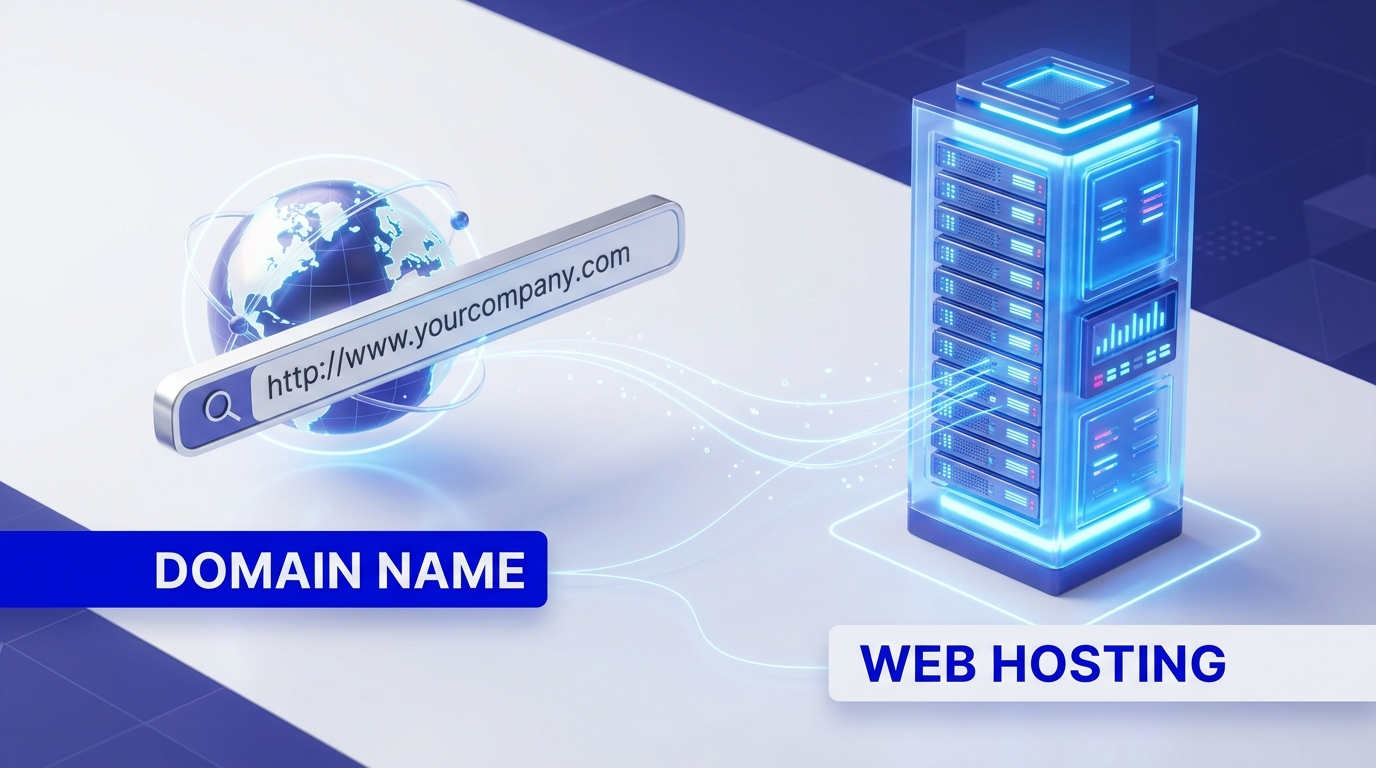
    To use an everyday analogy: a domain name is the street address of your house, while web hosting is the physical lot and building structure where your furniture, rooms, and belongings reside. Below, we break down their exact definitions, examine their key technical differences, and explain how they work together seamlessly through DNS resolution.

    What is a domain name?

    A domain name is the unique, human-readable address visitors enter into a web browser to reach your website (such as wyrebase.com or wikipedia.org).

    Every server connected to the global internet is assigned a numerical IP address (like 192.0.2.45 in IPv4 or 2001:db8::1 in IPv6). Because memorizing complex strings of numbers for every site is impractical, the Domain Name System (DNS) translates friendly brand names into machine-readable IP coordinates automatically.

    A domain consists of two fundamental components:

    • Second-Level Domain (SLD): The customized name representing your brand or project (in wyrebase.com, «wyrebase» is the SLD).
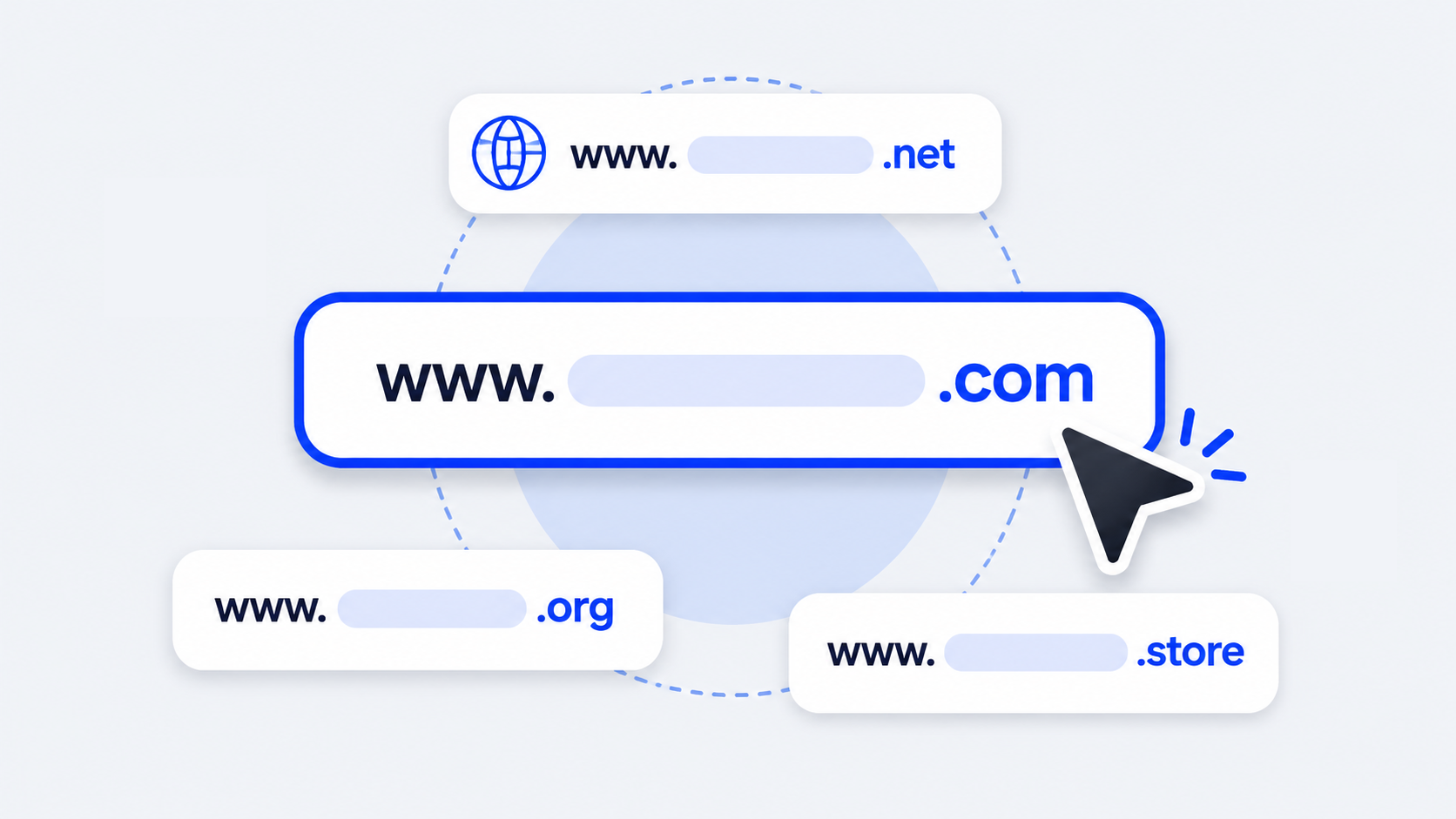
    • Top-Level Domain (TLD or Extension): The extension suffix at the end, such as .com, .net, .org, country codes like .uk, .ca, or modern tech extensions like .io and .ai.

    Domain names are registered through accredited domain registrars overseen by ICANN. Registration grants you exclusive operating rights to that web address for your contracted term (typically 1 to 10 years).

    What is web hosting?

    Web hosting is the specialized server infrastructure that stores and delivers your website’s files, images, stylesheets, databases, and code to visitors worldwide 24 hours a day, 365 days a year.

    When you subscribe to a hosting plan, you lease computing resources—including CPU cores, RAM, solid-state storage, and network bandwidth—on an enterprise server housed in a tier-3 or tier-4 datacenter with redundant power supplies and ultra-fast optical uplinks.

    Common types of hosting include:

    • Shared Hosting: Multiple websites share the hardware resources of a single server. It is the most budget-friendly option for personal projects and small businesses.
    • Managed WordPress Hosting: Servers optimized specifically for WordPress with LiteSpeed Enterprise web servers, object caching (Redis), and automated security patching.
    • Virtual Private Servers (VPS): A physical server partitioned via KVM virtualization into isolated environments with dedicated CPU/RAM slices and root access for developers.
    • Cloud Hosting: Sites run across an interconnected cluster of cloud nodes, offering automatic failover: if one node undergoes maintenance, another handles traffic immediately with zero downtime.

    Key differences between a domain and web hosting

    While domains and hosting operate in tandem, their technical responsibilities are distinct. The comparison table below highlights their differences at a glance:

    Feature Domain Name Web Hosting
    Definition The unique alphanumeric address used to find a site online. The server hardware and storage space where site files reside.
    Primary Purpose Enables users to locate and remember your website easily. Executes application code, processes database queries, and serves content.
    Technical Function Points DNS records to the hosting server’s IP address. Runs the web server (LiteSpeed, Nginx) and transmits HTML/CSS to the browser.
    Provider Entity ICANN-accredited domain registrars. Web hosting infrastructure and datacenter providers.
    Uniqueness Strictly globally unique. No two parties can own the exact same domain. Shared or dedicated. Multiple websites can live on the same physical server.
    Pricing Model Fixed annual fee (typically $10–$20/year depending on the TLD). Monthly or annual subscription based on hardware resources (from $2.99/mo).
    Independence Can exist without hosting (e.g., parked or forwarded to a social profile). Can technically run via raw IP, but impossible to brand or rank on search engines.

    Do you really need both to launch a website?

    Yes, absolutely. You need both. A live, operational website cannot function without both elements in place:

    • If you have a domain without hosting: Visitors typing your URL will see a generic registrar placeholder or a DNS lookup error. Your brand name is secured, but there are no web pages to display.
    • If you have hosting without a domain: Your website files exist on a live server, but users would have to type an obscure numeric IP address (e.g. http://198.51.100.24). SSL certificates will fail to validate properly, and search engines like Google will not rank your platform.

    Should you buy domain and hosting together or separately?

    Both approaches are technically valid, but purchasing them together offers substantial advantages for most users:

    Benefits of buying domain and hosting together (Recommended)

    • Instant automatic DNS pairing: When purchased together from Wyrebase, nameservers and DNS records connect out of the box with zero manual entry required.
    • Single billing dashboard: Manage domain renewals, corporate email accounts, and server resources from one unified portal.
    • Cost savings: Annual hosting plans frequently include a free domain registration for the first year.
    • Unified technical support: One engineering team troubleshoots both server configurations and DNS routing issues directly.

    When does buying separately make sense?

    Large corporations managing hundreds of global trademarks sometimes maintain centralized domain portfolios with enterprise registrars while distributing hosting across multiple regional cloud providers.

    How domain and hosting work together: The step-by-step DNS journey

    When someone opens a browser and types your domain name, an orchestrated sequence unfolds in milliseconds:

    1. User request: The visitor enters yourdomain.com and hits Enter.
    2. DNS lookup: The browser queries recursive DNS resolvers to find the authoritative nameservers for the domain.
    3. IP resolution: The authoritative nameserver responds with the hosting server’s exact IP address.
    4. Server handshake: The browser initiates an encrypted HTTPS connection with that IP address, requesting the site’s homepage files.
    5. Page render: The hosting server executes PHP scripts, queries the MySQL database, and delivers HTML, CSS, and images back to the visitor’s device.

    5 steps to get started with your domain and hosting in 2026

    Launching your website takes five straightforward steps:

    1. Pick a strong domain name: Keep it concise, memorable, and free of hyphens. A .com or reputable ccTLD establishes immediate trust.
    2. Select an enterprise hosting plan: Opt for modern NVMe storage and LiteSpeed Enterprise servers to achieve top Core Web Vitals scores.
    3. Enable WHOIS privacy protection: Protect your personal contact details from telemarketers and spam scrapers.
    4. Activate free SSL security: Enforce HTTPS encryption across all pages using automated Let’s Encrypt certificates.
    5. Deploy your website or CMS: Install WordPress with 1-click tools or deploy a headless modern frontend to begin welcoming visitors.
  • How Many Domains Are There in 2026? Global Statistics and Market Insights

    How Many Domains Are There in 2026? Global Statistics and Market Insights

    Executive Summary (Key 2026 Data)

    As of 2026, the global domain name census stands at 392.5 million registered domains across all top-level domains (TLDs), recording a year-over-year expansion of 6.5% with over 24.1 million net new additions. .com continues to lead the digital space with 163.6 million registrations (41.7% of the global market), while tech innovation drives the .ai extension to a historic 74.1% renewal rate.

    How many domain names are there in the world right now?

    A domain name is no longer just a technical address on the web—it is the foundational digital asset and brand anchor for modern organizations. According to the latest official Domain Name Industry Brief (DNIB) published by Verisign and tracking reports from ICANN (Internet Corporation for Assigned Names and Numbers), there are currently 392.5 million registered domain names worldwide.

    This figure reflects steady market acceleration: during the first quarter of 2026 alone, 5.6 million net new domains were registered (+1.4% quarter-over-quarter). Globally, there is approximately one registered domain name for every 22 people on Earth, underscoring how central website ownership has become to commerce, professional identity, and independent creators.

    Top 10 domain industry statistics for 2026

    1. 392.5 million global registrations: Reaching an all-time record, propelled by small business formation and the creator economy.
    2. 1,265 active TLD extensions: Delegated in the global root zone managed by IANA, offering registrants unprecedented naming variety.
    3. 163.6 million .com registrations: The premier legacy extension commands more domain volume than the next 20 extensions combined.
    4. 176.1 million under Verisign (.com + .net): Both TLDs demonstrated a combined 3.7% year-over-year growth, proving that businesses still prioritize proven institutional trust.
    5. 146.3 million country-code domains (ccTLDs): National extensions represent 37.3% of the global landscape, expanding at a steady 2.4% annual pace.
    6. 49.6 million new generic TLDs (nTLDs): Modern extensions (.xyz, .top, .online, .tech) represent the fastest-growing percentage tier at +31.3% year-over-year.
    7. 67% market concentration: Despite more than 1,200 available extensions, the top 10 TLDs capture two-thirds of all worldwide registrations.
    8. .ai outperforms with a 74.1% renewal rate: Unlike speculative new extensions plagued by high turnover, artificial intelligence investments have solidified .ai as a high-retention commercial standard.
    9. 88% of homoglyph domains are held by third parties: Nearly nine out of ten lookalike domains mimicking recognized brands are owned by unauthorized third parties for domain parking, ads, or phishing.
    10. $1.17 billion domain aftermarket by 2033: The projected market valuation for premium secondary-market domain name transactions.

    Domain name market breakdown by TLD category

    The global registry landscape divides into three principal categories, each characterized by distinct renewal patterns, regulatory frameworks, and registrant profiles:

    TLD Category Total Registrations Market Share Average Renewal Rate Prominent Examples
    Legacy gTLDs 196.6 million 50.1% 76% – 79% .com, .net, .org, .info, .biz
    Country-Code TLDs (ccTLDs) 146.3 million 37.3% 72% – 82% .de, .cn, .uk, .nl, .es, .fr
    New generic TLDs (nTLDs) 49.6 million 12.6% 25% – 35% .xyz, .top, .online, .tech, .ai

    As illustrated in the data, legacy extensions retain over half of the global market because of cognitive customer trust. When users type a brand name from memory, their immediate default assumption remains the .com suffix.

    The 10 most registered domain extensions worldwide

    Here is the official hierarchy of the top ten domain extensions by total active volume in 2026:

    • 1. .com (163.6M): The unchallenged global benchmark since 1985. Essential for multinational corporations and high-growth commercial ventures.
    • 2. .cn – China (20.9M): The world’s largest country-code extension, energized by China’s extensive internal internet economy.
    • 3. .de – Germany (17.9M): Known as one of the most stable and trusted ccTLDs in existence, widely favored over .com by German consumers.
    • 4. .net (12.5M): A veteran pillar of web infrastructure that remains the premier alternative when .com is unavailable.
    • 5. .org (11.0M): The universal home for open-source initiatives, non-profits, institutions, and community movements.
    • 6. .uk – United Kingdom (10.2M): The foundational commercial extension across Great Britain.
    • 7. .xyz (8.1M): The leading new gTLD, heavily embraced by Web3 organizations, tech startups, and Alphabet/Google (abc.xyz).
    • 8. .ru – Russia (5.8M): Holds substantial registration volume across Eurasian and Russian-language web markets.
    • 9. .nl – Netherlands (5.5M): Backed by one of Europe’s highest per-capita digital adoption rates.
    • 10. .top (5.1M): A generic alternative that has captured extensive volume through aggressive pricing in emerging markets.

    The remarkable rise of the .ai domain

    While assigned to the Caribbean island of Anguilla, the .ai country code has been adopted worldwide as the official identifier for artificial intelligence startups. Unlike speculative promo extensions with high churn, .ai boasts a renewal rate of 74.1%, demonstrating genuine enterprise deployment, sustained venture backing, and real software production.

    Renewal rates: active digital products vs. speculative bulk registrations

    Looking strictly at gross registration totals can be misleading. In web infrastructure, the definitive metric of ecosystem health is the renewal rate.

    Legacy extensions like .com and .org consistently renew between 76% and 79%. Over three-quarters of registrants continue investing in their domain year after year, confirming the presence of active websites, operational business email, and long-term brand equity.

    Conversely, the overall renewal rate for new generic TLDs averages just 30.9%. Highly discounted initial registration promotions often prompt domainers to register batches of hundreds of names, which are subsequently dropped at the end of year one when standard renewal fees apply. For sustainable brand development, building on extensions with proven retention minimizes devaluation risk.

    Cybersecurity and defensive registration: guarding against homoglyph threats

    With 392 million domains in circulation, brand security has become critical. Homoglyph domains (lookalike addresses that swap characters, such as replacing “l” with “1” or “o” with “0”) are an escalating vector for corporate impersonation.

    According to CSC’s enterprise security research, 88% of lookalike domains are owned by unaffiliated third parties. Significantly:

    • 40% of these domains maintain active mail (MX) records, allowing bad actors to send convincing phishing emails posing as corporate executives or invoicing departments.
    • 32% of inactive domains still possess live mail servers for covert spear-phishing operations.
    • 67% of Global 2000 enterprises have not implemented fundamental defensive registration safeguards.

    Defensive registration involves securing your brand name across key extensions (.com, relevant country codes like .es or .co.uk, and common phonetic variants) before unauthorized parties exploit them.

    How to choose and secure your ideal domain with Wyrebase

    To capitalize on 2026 market dynamics when launching your website, follow these strategic guidelines:

    1. Secure the .com whenever accessible: If the .com is available at standard rates, register it immediately to prevent audience confusion and capture organic direct traffic.
    2. Pair with your regional ccTLD: If your target market is concentrated in a specific country, a local ccTLD provides strong local search optimization signals and consumer familiarity.
    3. Ensure free WHOIS Privacy protection: At Wyrebase, WHOIS privacy comes standard, keeping your personal phone number, home address, and identity shielded from public scrapers and spam databases.
    4. Deploy low-latency Anycast DNS: A great domain demands fast resolution. Wyrebase integrates Anycast global name servers that resolve DNS queries in under 15ms worldwide.

    Check immediate name availability and explore competitive registration rates using the Wyrebase Domain Checker.

    Frequently asked questions about domain registrations

    Who governs global domain name allocations?

    The ICANN (Internet Corporation for Assigned Names and Numbers) is the non-profit international entity overseeing the global domain name system and IP address distribution. Operating underneath ICANN are registries (such as Verisign for .com) and accredited registrars who handle retail registrations.

    Can you purchase a domain name permanently?

    No. Domains are licensed under a lease model for terms ranging between 1 and 10 years. As long as the registrant renews prior to expiration, they retain uninterrupted exclusive rights to the name.

    What should I do if my preferred .com is already taken?

    First, verify whether the existing domain hosts an active site or is available on the secondary market. If unavailable, consider your primary country-code extension or an industry-relevant modern TLD like .ai, .tech, or .store, ensuring brand simplicity remains paramount.